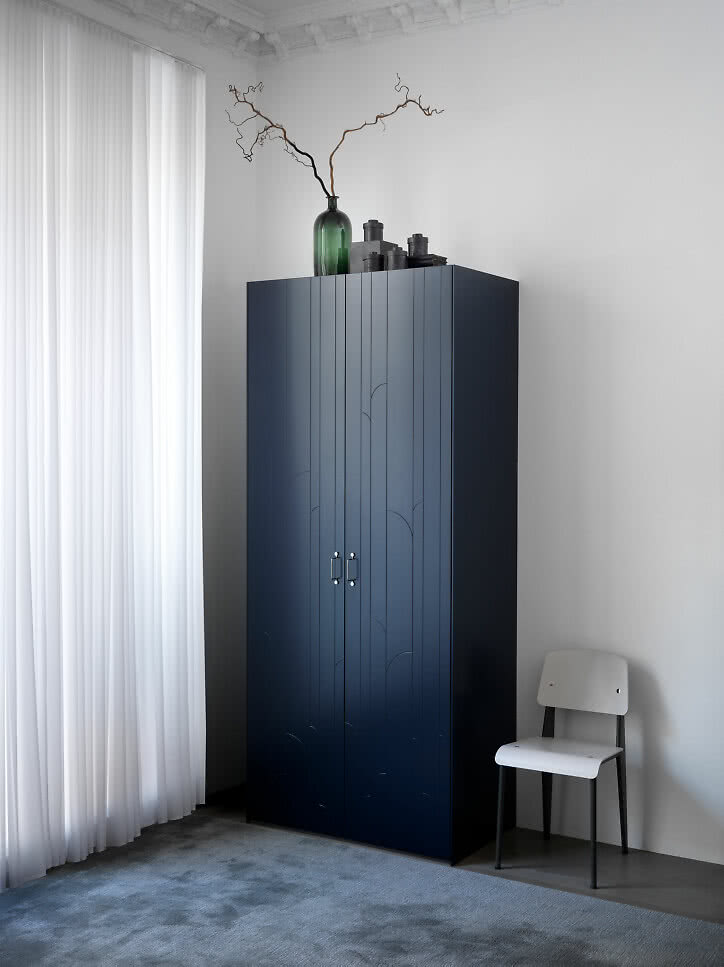
Our approach to sustainability.
Since 2013, our goal has been to offer our customers stylish, sustainable and affordable design that encourages circular consumption. Every year, more than 20 million tons of furniture are thrown away in the EU and the US alone – many of which are fully functional – and the consequences for the environment are huge.
By creating designs for Ikea's most popular furniture frames, we have made it possible to instead reuse these pieces of furniture on the day they become worn – and with only a minimum of new material! This means great benefits for nature, but also for you as a customer as you can get kitchens and furniture that are both stylish, affordable and sustainable!
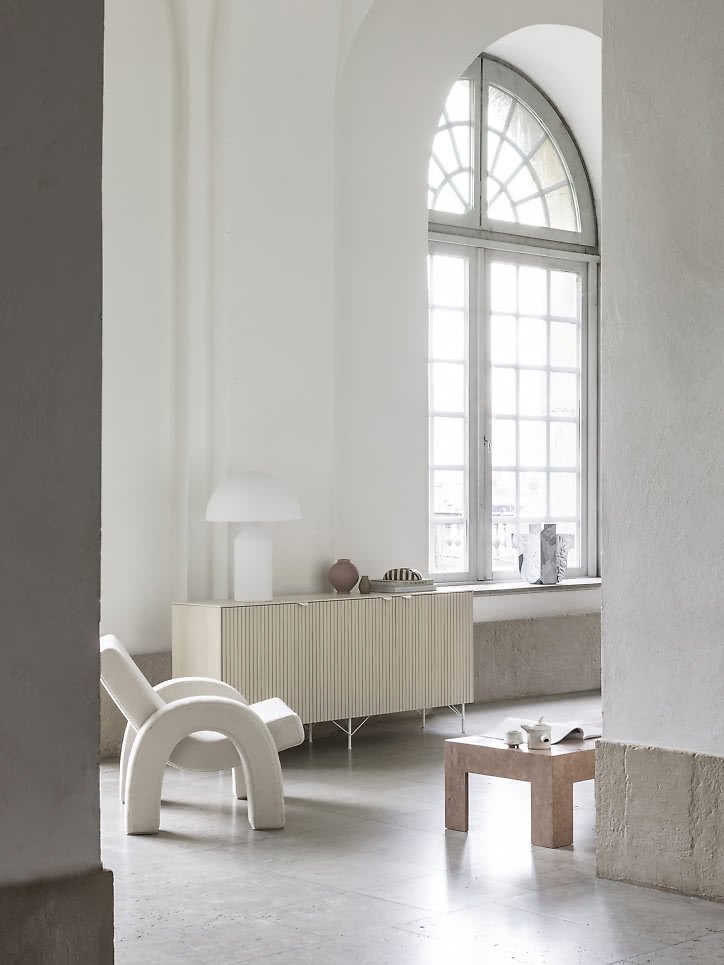
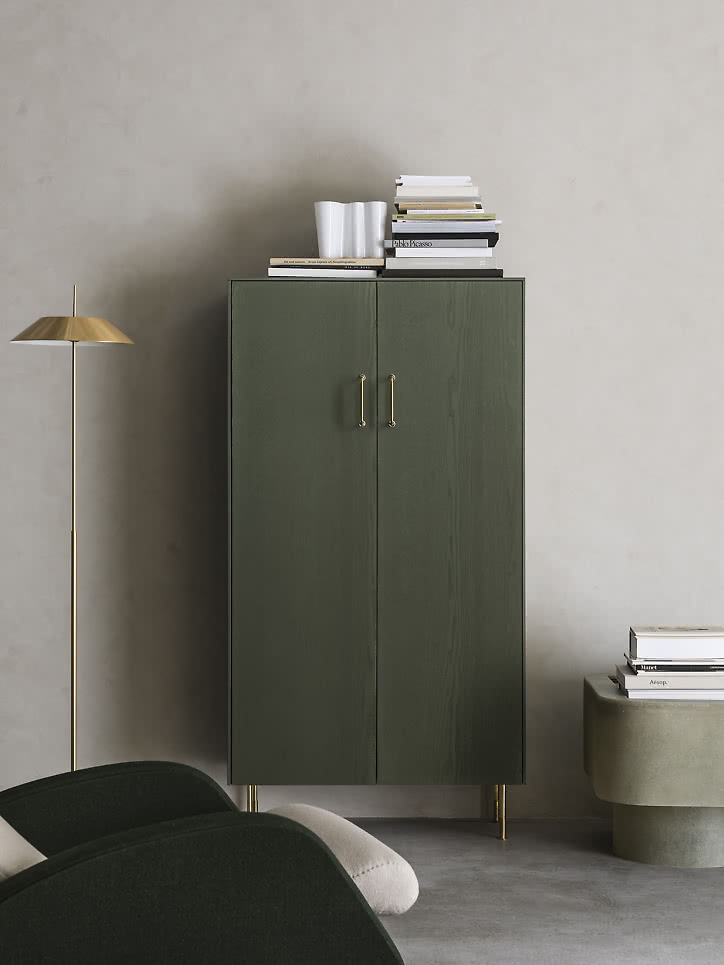
What do we do in addition to our circular approach to interior design?
• To minimise our environmental impact, we only work with wood producers who practice responsible forestry – both from an environmental and social point of view.
• The MDF we use has the highest possible environmental MDF classification if one also takes the service life of the material into account. In the end, this means that the MDF we use will make the smallest carbon footprint possible.
• We use water-based lacquer instead of the more common type of lacquer containing polypropylene. Water-based lacquer is just as durable as other types of lacquer but is a bit more expensive.
• We keep 98% of our production in Sweden, meaning we produce close to our main markets. This means we keep shipping distances and emissions down.
• We only use environmentally certified corrugated and craft cardboard in our packaging. The reason we use these materials is because they can be recycled many times over. They are also easy for customers to return for recycling.
• We have minimised the use of instructions on paper in our shipments. Instead, we encourage our customers to read them online.
• We require that each supplier follow the Ten Principles of the UN Global Compact 2000 initiative (An initiative which in turn is based on the United Nations' Universal Declaration of Human Rights, the International Labour Organisation’s Declaration on Fundamental Principles and Rights at Work 1998, the Rio Declaration on Environment and Development 1992, and the United Nations Convention Against Corruption 2003). The Ten Principles govern issues to human rights, labour, the environment and anti-corruption and are the basis of our requirements for all contracted suppliers and supply chains.
What else do we intend to do in order to minimise our carbon footprint?
• Offer our customers more environmentally friendly shipping alternatives.
• Get our packaging to contain 0% fossil-based plastic.
• Achieve a chemical-free production.
• Lower the amount of paper in our packaging.
• Increase the use of local materials and local production to lower the shipping from countries far away from our main markets.
This said, our quest to let people decorate their homes with stylish and sustainable furniture is far from over. In fact, it will never end. There will always be more to do and new ground to break. Our goal is to always be curious about new ways of thinking in terms of new techniques, alternative production methods, and more environmental ways of transporting and packaging – but also to have an ongoing dialogue with our customers in order to constantly lower our carbon footprint.
If you have feedback or input to give us on this journey towards minimising our emissions – don’t hesitate to get in touch with us at: [email protected]